 HVACWard
HVAC lead generation: 14 ways to keep the schedule full
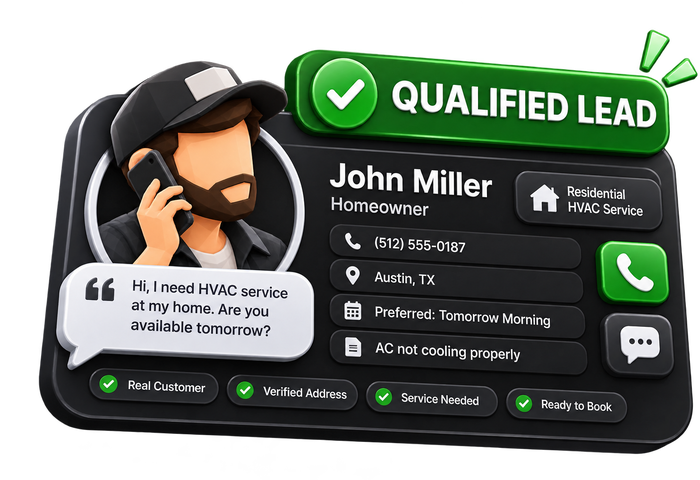
A lead for an HVAC company is not a form fill. It is a homeowner with a broken system who has decided someone is coming out this week — and the only question is whether it is you. Everything in this piece exists to answer that one question more often.
The channels below are ordered by how quickly they produce booked work, not by how impressive they sound.
Start with the leads you already have
1. Answer the phone
Unanswered calls are the most expensive leads in your business because you already paid to generate them. During peak season a meaningful share of inbound rings go to voicemail — and callers rarely leave one. After-hours and overflow answering is usually the fastest revenue available to a growing shop.
2. Call back every missed opportunity
A callback within five minutes converts several times better than one the next morning. Speed-to-lead is the single most reliable lever in this entire list.
3. Work the quote list
Estimates written but never accepted are paid-for leads sitting in your CRM. One follow-up call — "still want that quote, or has it gone cold?" — recovers a share of them with no new spend.
Search: where intent already exists
4. Rank in the map pack
Queries like "ac repair near me" resolve to the map pack before anything else. Categories, reviews, service-area pages and an accurate profile decide who appears.
5. Capture emergency searches with paid ads
Emergency intent converts on the first call, which is exactly why it costs the most. Keep it in a separate campaign so a heat wave does not cannibalise your brand budget.
6. Answer "how much" queries with honest content
People pricing a replacement search for cost and compatibility before they search for a contractor. Publishing real ranges earns the click early, and early clicks are cheap.
Referral and partner channels
7. Build a trade referral network
Plumbers, electricians, roofers and remodelers meet homeowners every day who need HVAC work. So do property managers, realtors and small builders. A short, reliable handoff — and an honest thank-you — is worth more than a display campaign.
8. Ask for referrals at the point of delight
The best moment is when the tech leaves and the house is comfortable again. A specific ask with a specific reward works; a generic "tell your friends" does not.
9. Put your vans and yard signs to work
The cheapest impressions you will ever buy are on the truck parked in front of the job. Make sure the number is legible from the curb.
Owned channels: leads you do not rent
10. Grow a maintenance plan list
Members generate the shoulder-season calls that keep crews busy between peaks, and they book without shopping around. See how to grow tune-up volume without adding office staff.
11. Email and SMS the existing customer base
Two well-timed sends a year — a pre-season check reminder and a winter readiness note — outperform most prospecting for a fraction of the cost.
12. Retarget website visitors
Most visitors do not book on the first visit. Retargeting keeps you in the shortlist while they decide.
13. Collect reviews consistently
Reviews are both a ranking signal and a trust signal. A steady trickle beats a burst of thirty in one week.
14. Keep the CRM honest
Every lead that comes in should have an owner, a next action and a date. Leads do not die in a pipeline — they die in a column nobody opens.
Build one weekly rhythm
- Daily — answer rate, missed-call callbacks, new reviews.
- Weekly — quote follow-ups, partner touches, ad spend against booked jobs.
- Monthly — cost per booked job by channel, review velocity, plan membership.
- Quarterly — cut the channel that produced no booked jobs, double the one that beat target.
Most HVAC companies do not need more channels. They need three channels run properly, and a phone that gets picked up.
See it handle a real HVAC call
Book a 15-minute demo and hear a voice agent answer, qualify and book a job on your own test line.