 HVACWard
Why after-hours calls are the most profitable jobs you are missing
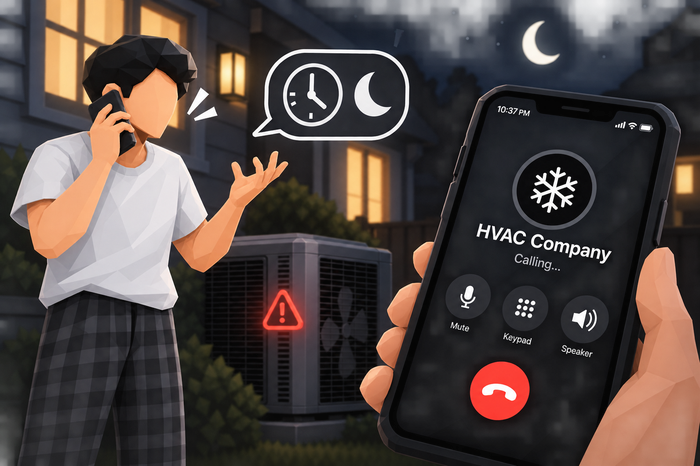
Ask any HVAC dispatcher which calls they would protect first and they will usually say the same thing: the emergencies. No heat in January. No cooling in a heat wave. Water where water should never be. These callers are not price shopping — they are motivated, and they book fast.
The trouble is that emergencies do not respect office hours. A large share of them arrive between 6pm and 6am, or across a weekend. That is precisely when the office phone is least likely to be answered.
The after-hours gap is a booking gap
During the day, a busy line at least has a chance of being picked up eventually. After hours, there is no fallback at all. The call goes to a recorded greeting and the caller moves on. There is no queue, no hold music and no second chance.
That is why after-hours coverage tends to produce the largest single jump in bookings when HVAC companies switch on a voice agent. The calls were always there — they simply were never converted.
What good after-hours answering looks like
An agent that answers immediately, understands HVAC vocabulary, can tell an emergency from a routine request, books the job into the next available slot and escalates genuine emergencies to the on-call technician. No menu, no callback promise, no wait.
Done well, after-hours stops being lost business and becomes your most reliable source of high-intent work — the kind of jobs that often carry premium rates and build long-term customers.
Where to start
You do not have to move your whole phone line on day one. Most HVAC teams begin with after-hours and weekend coverage, watch the bookings arrive for a month, then extend it as the evidence stacks up.
See it handle a real HVAC call
Book a 15-minute demo and hear a voice agent answer, qualify and book a job on your own test line.